The surplus China doesn’t report
Brad Setser puts China’s true current account surplus at about $1.2 trillion, or 5.5% of GDP (his chart here). Officially it is 4%, over $600 billion across the last four quarters. The gap comes from gold imports, an investment income line that books as a deficit when it should be a surplus, and a 2022 change in how the goods balance is compiled. Greg Ip ran the adjusted figure through the IMF’s own model and got a yuan 35% undervalued.
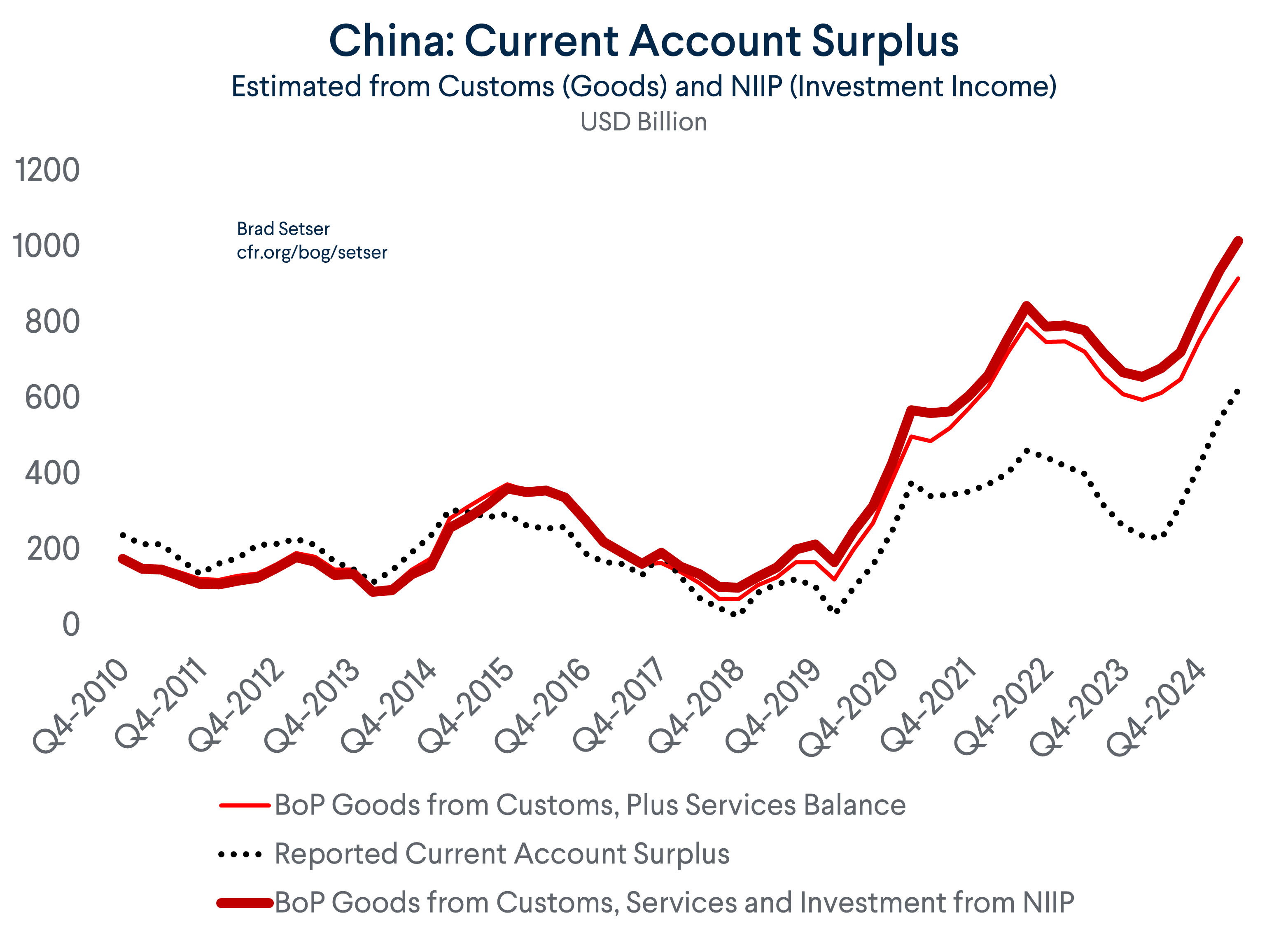
Setser has been pulling apart China’s balance of payments for years, first at Treasury and now at CFR’s Follow the Money blog. He publishes the arithmetic as he goes, which is rare. For the actual Chinese figures rather than the reported ones, he is the source to follow. The core problem is visible in the second chart: after 2022 the customs surplus and the balance-of-payments version diverged, and the explanations given so far do not hold up.
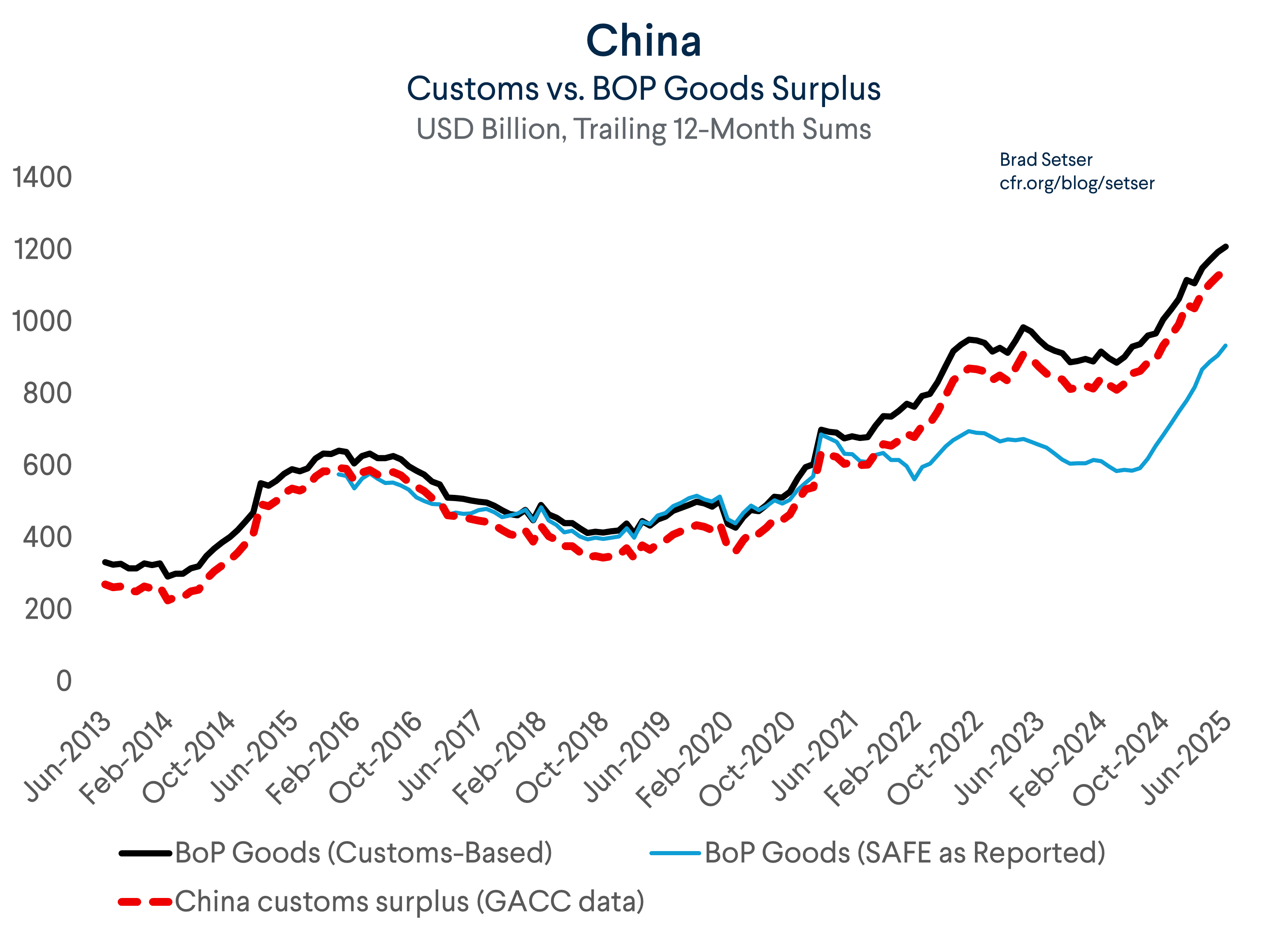
A surplus this size exports pressure. US tariffs pushed Chinese goods toward Europe, Southeast Asia, India and Latin America, and manufacturers there now feel what American ones felt two years ago. My guess: the coming friction is China against the rest of the world, with Washington as one counterparty among several.
Michael Pettis gives the mechanism. A current account surplus is the gap between saving and investment, and China’s is engineered: wage growth trails productivity, the safety net is thin, so households save and consume little. Production outruns domestic absorption and the excess sells abroad. One country’s surplus is another’s deficit; the deficit country absorbs the saving through debt or job losses. Tariffs look like protectionism but are mostly a response to mercantilism. I touched on the same machine in Blame the saving rate.
Rebalancing means paying Chinese households more, which the system has resisted for two decades. Until that changes, the surplus stays and the pressure keeps landing abroad.